


Biodiversity / Food / Water
February 27, 2003
ACROS Fukuoka: Manmade "Mountain" Eases Urban Heat Island Effect
Keywords: Climate Change Ecosystems / Biodiversity Non-manufacturing industry
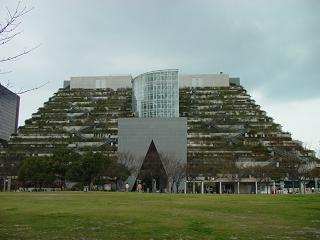
ACROS Fukuoka
The Step Garden consists of 13 tiers, six meters deep and between 120 to 98 meters wide. The garden looks like a natural mountain, for it contains 37,000 plants of 76 species, including trees such as the Japanese plum and maple, and hanging plants such as Shore Juniper. So far the garden has been blessed with sufficient rainfall, so the attached sprinkler system hasn't been used yet.
A study showed that tree planting on the step-shaped rooftop has helped alleviate the urban heat island effect. The daytime temperature of concrete surfaces exceeded 50 degrees Celsius, while plant surfaces were 15 degrees lower, at 38 degrees. Plants also helped cool the surrounding air by transpiration.
Thanks to the terraced shape of the Step Garden, downdrafts blew along the slope even during the night when the wind is usually moderate elsewhere. After nightfall, the temperature of the plant-covered surfaces decline sharply due to radiative cooling, which produces the cold air blowing down the stepped garden. The garden is expected to help ease sweltering summer nights, when the temperature often stays above 25 degrees in urban areas.
Posted: 2003/02/27 10:46:54 AM
Japanese version

Related
"JFS Newsletter"
- 'What Are the Roles of Zoos Today?' - Interview with Director of the Popular Asahiyama Zoo
- Nishiawakura's Initiative for 100% Energy Self-Sufficiency, and a Municipal ICO Scheme
- 15-Year Integrated Forest Environment Education in Shimokawa, Hokkaido to Support Sustainable Forest Management
- Fifth Contest to Award Excellent Environmental and Social Practices by Junior High, High School Students
- Increase Revenues without Increasing Catches -- How the Sustainable Sakura Shrimp Fishery in Suruga Bay Does It
Related
"Popular Articles"


Some rights reserved. This work is licensed under a Creative Commons Attribution-NonCommercial-ShareAlike 3.0 License.