


Reduce / Reuse / Recycle
July 5, 2008
Co-op at Japan's Mie University Sees Dramatic Drop in Use of Plastic Bags by Charging Fees
Keywords: Climate Change Policy / Systems Reduce / Reuse / Recycle University / Research institute
The number of plastic shopping bags used annually at the Mie University Co-op is on track to being reduced by a remarkable 95 percent, the university's Student Committee of the Environmental Management Office reports. The reason: in January 2008 the co-op started charging shoppers five yen (about 5.1 U.S. cents) for each plastic bag.
According to a survey conducted at the end of June 2007, some 200,000 plastic shopping bags were being handed out at the co-op annually. That number, however, is estimated to have decreased to 9,320, based on the results of a survey in January 2008. The amount saved in a year was calculated to be equivalent to about 3,500 liters of oil, or nine tons of carbon dioxide (CO2) emissions.
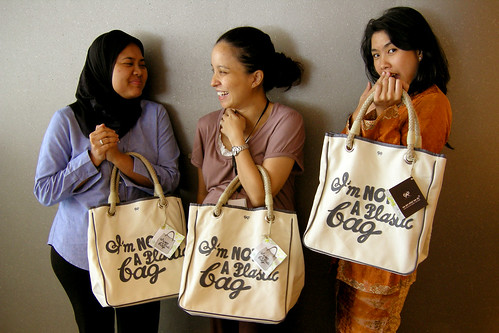
Prior to implementing the charge for plastic bags, the committee organized a design contest for environmentally friendly reusable bags. After awarding the best designs through voting by co-op members, the committee had reusable shopping bags manufactured and then distributed one to each student and staff member of the university in December 2007. These efforts raised awareness of the impact of plastic shopping bags among shoppers and contributed to reducing their use. The committee plans to continue encouraging shoppers to use reusable bags and will conduct follow-up surveys to monitor the use of plastic shopping bags.
http://www.mie-u.ac.jp/en/
- "No Plastic Bag Day" on the 5th of Every Month (Related JFS article)
http://www.japanfs.org/db/141-e
- Convenience Stores to Cut Plastic Bag Use by 35% by 2010 (Related JFS article)
http://www.japanfs.org/db/1463-e
- Local Gov't, Supermarket Agree on Plastic Bag Reduction (Related JFS article)
http://www.japanfs.org/db/1582-e
- Kobe City, Co-op Cooperate to Reduce Plastic Bag Use (Related JFS article)
http://www.japanfs.org/db/1659-e
- Supermarket Aeon Starts Charging for Plastic Shopping Bags in Kyoto (Related JFS article)
http://www.japanfs.org/db/1678-e
- Seiyu Refunds 2 Yen to Shoppers Using their Own Bag (Related JFS article)
http://www.japanfs.org/db/1862-e
- 60% of Shoppers Carry Own Shopping Bags, 12% Always Decline Free Plastic Bags (Related JFS article)
http://www.japanfs.org/db/1895-e
- Over 2 Million People Say No to Plastic Bags (Related JFS article)
http://www.japanfs.org/db/1967-e
- Stores in Nagoya City Start Charging for Plastic Shopping Bags (Related JFS article)
http://www.japanfs.org/db/1999-e
Posted: 2008/07/05 04:18:00 PM
According to a survey conducted at the end of June 2007, some 200,000 plastic shopping bags were being handed out at the co-op annually. That number, however, is estimated to have decreased to 9,320, based on the results of a survey in January 2008. The amount saved in a year was calculated to be equivalent to about 3,500 liters of oil, or nine tons of carbon dioxide (CO2) emissions.
Prior to implementing the charge for plastic bags, the committee organized a design contest for environmentally friendly reusable bags. After awarding the best designs through voting by co-op members, the committee had reusable shopping bags manufactured and then distributed one to each student and staff member of the university in December 2007. These efforts raised awareness of the impact of plastic shopping bags among shoppers and contributed to reducing their use. The committee plans to continue encouraging shoppers to use reusable bags and will conduct follow-up surveys to monitor the use of plastic shopping bags.
http://www.mie-u.ac.jp/en/
- "No Plastic Bag Day" on the 5th of Every Month (Related JFS article)
http://www.japanfs.org/db/141-e
- Convenience Stores to Cut Plastic Bag Use by 35% by 2010 (Related JFS article)
http://www.japanfs.org/db/1463-e
- Local Gov't, Supermarket Agree on Plastic Bag Reduction (Related JFS article)
http://www.japanfs.org/db/1582-e
- Kobe City, Co-op Cooperate to Reduce Plastic Bag Use (Related JFS article)
http://www.japanfs.org/db/1659-e
- Supermarket Aeon Starts Charging for Plastic Shopping Bags in Kyoto (Related JFS article)
http://www.japanfs.org/db/1678-e
- Seiyu Refunds 2 Yen to Shoppers Using their Own Bag (Related JFS article)
http://www.japanfs.org/db/1862-e
- 60% of Shoppers Carry Own Shopping Bags, 12% Always Decline Free Plastic Bags (Related JFS article)
http://www.japanfs.org/db/1895-e
- Over 2 Million People Say No to Plastic Bags (Related JFS article)
http://www.japanfs.org/db/1967-e
- Stores in Nagoya City Start Charging for Plastic Shopping Bags (Related JFS article)
http://www.japanfs.org/db/1999-e
Posted: 2008/07/05 04:18:00 PM

Related
"JFS Newsletter"
- 'Good Companies in Japan' (Article No.3): Seeking Ways to Develop Societal Contribution along with Core Businesses
- "We Sell Services, Not Products": Using LCA to Measure the Environmental Benefits of Nihonkai Gas's Heater Rentals
- Learning from Pollution Experience, Kitakyushu Now Promotes Sustainable Society in Asia
- Selling Services, Not Products: 15 years of Efforts and Achievements by Nihonkai Gas
- Making Olympic Gold Medals from 'Urban Mine' Sources
Related
"Popular Articles"
- Quality Fertilizer Developed from Rice Husk Ashes
- Revised Law Requires Recycling of Additional Home Appliances
- Used Bottle Caps Funding Polio Vaccines for World's Children
- No More Plastics Bags: McDonald's Promotes Simpler Packaging
- New METI/MOE Policy Promotes Recycling of Small Electrical and Electronic Equipment Waste


Some rights reserved. This work is licensed under a Creative Commons Attribution-NonCommercial-ShareAlike 3.0 License.